
 Leather
Tasbih, also known as Misbaha, Subha, or prayer beads, is a string of beads traditionally used by Muslims to keep count while performing dhikr, the remembrance of Allah. It is both a spiritual tool and a symbol of faith, often seen in the hands of worshippers or worn as a meaningful accessory.
Religious Significance
The word tasbih comes from the Arabic root “S-B-H”, meaning to glorify. In Islamic practice, tasbih is used to recite short phrases in praise of Allah, most commonly:
SubhanAllah (Glory be to Allah)
Alhamdulillah (All praise be to Allah)
Allahu Akbar (Allah is the Greatest)
These phrases are often repeated 33 or 99 times, inspired by the teachings of Prophet Muhammad (peace be upon him), particularly after each of the five daily prayers.
A traditional tasbih has 99 beads, divided into three sections of 33, or sometimes 33 beads used in sets of three rounds. Most tasbihs consist of 33, 66, or 99 beads, with every 33 beads often separated by a distinct marker bead to guide the user. At the end of the beads, there is typically a longer, central piece called the “imame”.
The imame, sometimes referred to as the imam bead or leader bead, is the elongated central piece that marks the starting and ending point of the tasbih. It not only helps to distinguish the direction in which the beads should be counted, but it also serves a structural and symbolic function:
Structurally, the imame connects the loop of beads and often anchors a tassel or additional decorative element.
Spiritually, it symbolizes leadership and guidance, reminding the user of the importance of intention and focus during dhikr.
The imame is often made from the same material as the rest of the tasbih or crafted with extra detail to highlight its special role.
Beyond its spiritual use, tasbih has also become a cultural and aesthetic accessory. Crafted in various materials such as wood, gemstone, and seeds to precious stones, amber, silver, and crystal tasbihs are often gifted during religious holidays, Hajj or Umrah pilgrimages, or special life events.
For many, carrying or wearing a tasbih brings a sense of peace, a reminder to stay mindful, and a symbol of devotion and identity.
Whether used in quiet prayer, worn as a bracelet, or kept close as a token of faith, the tasbih carries centuries of tradition and spiritual depth in each bead.
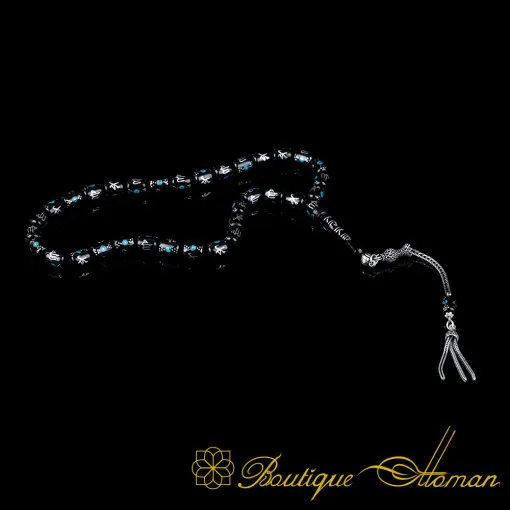
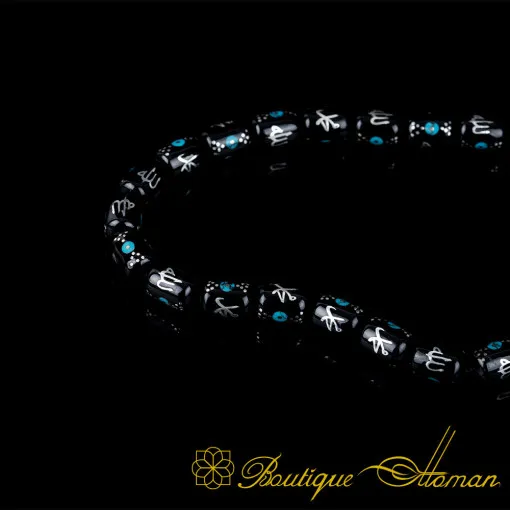
Gemstone Tasbih Misbaha

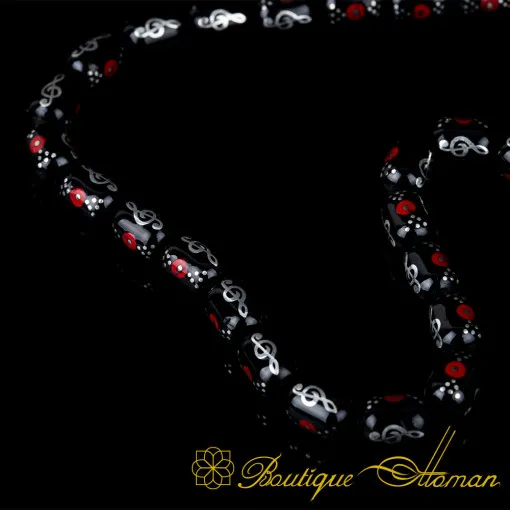
Gemstone Tasbih Misbaha
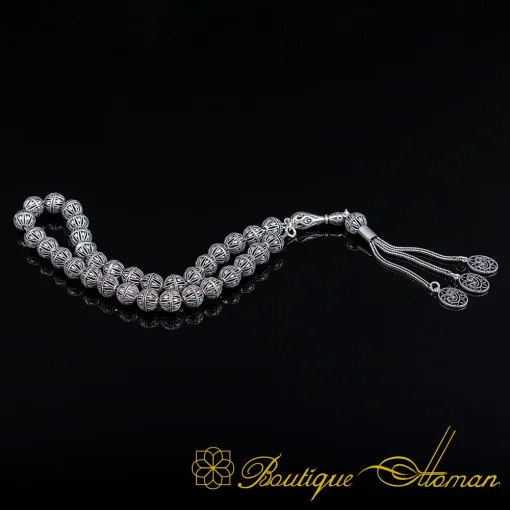
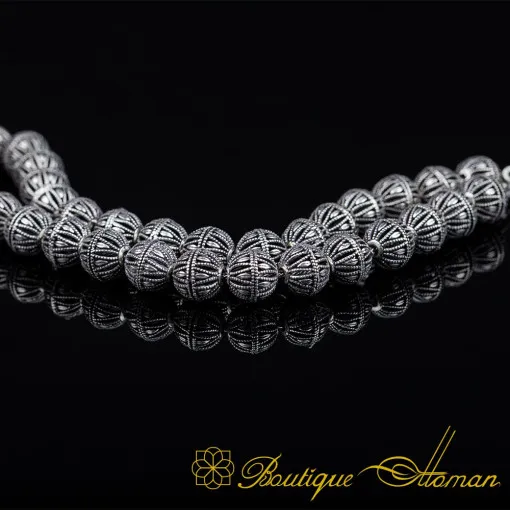
Tasbih Misbaha Collection


Silver Tasbih Misbaha
Unique Black & White Mina Micro Turquoise Detailed Silver Tasbih